
Delving into the realm of ‘what is qualitative data’ opens a window into understanding the rich tapestry of human experiences, perceptions, and behaviors. Unlike its quantitative counterpart, which deals in numbers and measurements, qualitative data embraces the nuances of words, observations, and narratives. This approach is not about finding definitive answers, but rather, about exploring the ‘why’ behind phenomena, providing a deeper understanding of complex social realities.
This exploration will navigate the core principles defining qualitative data, differentiating it from its numerical cousin, and showcasing its applications in various scenarios. We’ll delve into the diverse methodologies employed to gather qualitative information, from in-depth interviews and focus groups to ethnographic observations, each offering unique perspectives. Furthermore, the systematic approach to data collection, including participant selection and ethical considerations, will be examined. Finally, we’ll unpack the analytical techniques used to extract meaningful insights, along with effective communication strategies to present these findings in a compelling and ethical manner.
Understanding the Fundamental Nature of Qualitative Data is essential for research success
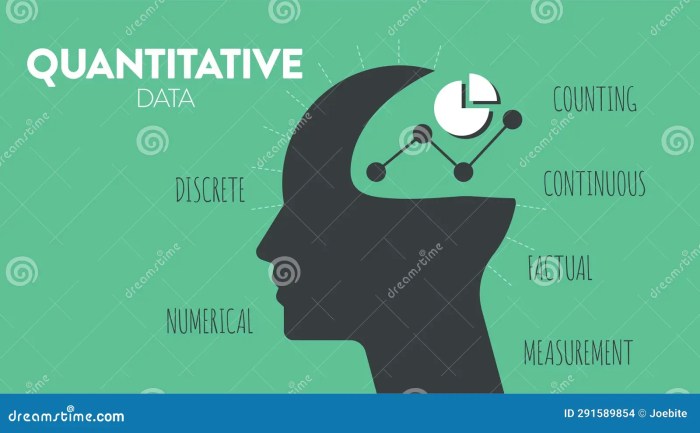
Understanding qualitative data is crucial for researchers seeking to explore complex human experiences, behaviors, and social phenomena. Unlike its quantitative counterpart, qualitative data delves into the “why” and “how” behind observations, providing rich contextual understanding. This approach is essential for gaining in-depth insights and developing a nuanced perspective on a given subject.
Core Principles Defining Qualitative Data
Qualitative data is fundamentally different from quantitative data. While quantitative data focuses on numerical measurements and statistical analysis, qualitative data emphasizes understanding experiences, perspectives, and meanings. It seeks to explore the “what,” “how,” and “why” of a phenomenon rather than simply measuring it. The core principles that define qualitative data are:
- Focus on Understanding: Qualitative research prioritizes understanding the ‘why’ behind phenomena. It seeks to explore the depth of experiences and perspectives.
- Exploration of Meaning: It aims to uncover the meaning individuals and groups assign to their experiences, actions, and the world around them. This often involves interpreting subjective viewpoints.
- Rich, Descriptive Data: Qualitative data relies on descriptive information, such as words, images, and observations, rather than numerical data. This data provides detailed context and allows for a comprehensive understanding.
- Contextual Analysis: Qualitative research emphasizes the importance of context. It recognizes that meaning is derived from the environment, social settings, and individual circumstances.
- Flexibility and Iteration: The research process is often flexible and iterative, allowing researchers to adapt their approach as they gain a deeper understanding of the subject matter. This allows for adjustments to data collection methods and research questions as needed.
Quantitative data, on the other hand, is numerical and statistical. It focuses on measuring and quantifying variables to identify patterns, relationships, and trends. Quantitative research employs statistical analysis to test hypotheses and draw conclusions based on numerical evidence. For example, a quantitative study might measure the average income of a group of people, while a qualitative study might explore their perceptions of financial security and well-being. The key difference lies in the type of information collected and the methods used to analyze it. Quantitative data answers questions such as “how many” or “how much,” while qualitative data answers questions such as “why” and “how.”
Appropriate Situations for Qualitative Data Collection
Qualitative data collection is particularly valuable in situations where the goal is to gain a deep understanding of a phenomenon, explore complex issues, or understand the experiences and perspectives of individuals or groups. Here are three distinct scenarios where qualitative data collection is more appropriate than quantitative data collection:
- Exploring Patient Experiences with a New Medical Treatment: Imagine a new drug is being introduced to treat a chronic illness. Quantitative research can measure the drug’s effectiveness in terms of physiological changes (e.g., reduced blood pressure). However, qualitative research, through interviews and focus groups, can uncover patients’ experiences with the treatment, including side effects, their perceived quality of life, and the emotional impact of the illness and the treatment. This can provide valuable insights for improving patient care and developing more effective treatments.
- Understanding Consumer Preferences for a New Product: Before launching a new product, a company might conduct quantitative surveys to gauge interest and gather demographic data. However, qualitative research, such as focus groups or in-depth interviews, can provide a deeper understanding of consumer preferences. This includes understanding the motivations behind their choices, their perceptions of the product’s features, and their overall experience with the product. For instance, a new electric vehicle manufacturer could conduct interviews to understand consumer concerns about range anxiety, charging infrastructure, and the overall ownership experience, information not readily captured by a simple survey.
- Investigating the Impact of a New Educational Program: Quantitative research can measure the impact of a new educational program on test scores and graduation rates. However, qualitative research, such as classroom observations and interviews with students and teachers, can provide a richer understanding of the program’s impact on student engagement, learning styles, and teacher effectiveness. This can reveal how the program is perceived by participants, the challenges they face, and the factors that contribute to its success or failure. For example, observations in a new classroom might uncover that a new curriculum is not working because of the lack of available technology.
Value of Qualitative Data for Exploring Complex Social Phenomena
Qualitative data is exceptionally valuable for exploring complex social phenomena due to its ability to capture nuance, context, and the subjective experiences of individuals. It allows researchers to move beyond surface-level observations and delve into the intricate details that shape human behavior and social dynamics.
- Capturing Nuance: Qualitative research excels at capturing the subtleties and complexities of human experiences. By using methods such as in-depth interviews and focus groups, researchers can uncover the nuances of attitudes, beliefs, and behaviors that are often missed by quantitative methods.
- Providing Context: Qualitative data provides a rich understanding of the context in which phenomena occur. It allows researchers to explore the social, cultural, and historical factors that influence individuals’ experiences and perspectives. This is essential for understanding the meaning and significance of events and actions.
- Exploring Subjective Experiences: Qualitative research centers on understanding subjective experiences. It provides a platform for individuals to share their stories, perspectives, and interpretations of the world. This is particularly valuable for exploring sensitive topics or marginalized communities where quantitative methods may not be as effective.
- Generating New Hypotheses: Qualitative research can be used to generate new hypotheses and research questions. By exploring a topic in depth, researchers can identify new areas of inquiry and develop a more comprehensive understanding of the subject matter. This iterative process is crucial for advancing knowledge and understanding complex social phenomena.
Exploring the Diverse Methods for Gathering Qualitative Information reveals different research avenues
Qualitative research thrives on rich, descriptive data, offering in-depth insights into human experiences, behaviors, and perspectives. The methods employed to gather this information are as varied as the topics they explore. Choosing the right method is crucial for ensuring the research effectively addresses its objectives and provides meaningful results. Several approaches offer unique avenues for exploration, each with its strengths and weaknesses, suitable for different research questions and contexts.
This section delves into several key methodologies used in qualitative research, providing detailed explanations and examples to illustrate their application. We will also examine their respective advantages and disadvantages, culminating in a structured guide for conducting a semi-structured interview.
Detailed Exploration of Qualitative Data Collection Methods
Qualitative data collection methods provide researchers with the tools to delve deeply into complex phenomena. These methods often involve direct interaction with participants, observation of behaviors, or analysis of existing materials. Each method has its unique characteristics and is best suited for specific research goals. Understanding these nuances is critical for selecting the most appropriate method for a given study.
- Interviews: Interviews are a cornerstone of qualitative research, allowing researchers to gather detailed information directly from individuals. They come in various forms, including structured, semi-structured, and unstructured interviews.
- Structured Interviews: These interviews follow a predetermined set of questions, ensuring consistency across all participants. They are useful when standardized data is needed for comparison. However, they may limit the depth of exploration. An example is a survey conducted by a market research firm where each participant is asked the same questions in the same order to gather information about product preferences.
- Semi-structured Interviews: These interviews use a guide of pre-defined questions, but allow flexibility for the interviewer to probe deeper into responses and explore emerging themes. This format is common in academic research. For example, a researcher might use a semi-structured interview to understand the experiences of patients undergoing a specific medical treatment, starting with a core set of questions about their symptoms, but allowing for follow-up questions to understand the nuances of their experiences.
- Unstructured Interviews: These interviews are more conversational, with minimal pre-planned questions. They are used to explore a topic in-depth and allow for a natural flow of conversation. They are particularly useful when the researcher is exploring a new topic or seeking to understand the participant’s perspective. A journalist might conduct an unstructured interview with a witness to a crime, allowing the witness to freely share their account of events.
- Focus Groups: Focus groups involve a small group of participants (typically 6-10) discussing a specific topic under the guidance of a moderator. The moderator facilitates the discussion, encourages interaction among participants, and guides the conversation to explore the topic in depth.
Focus groups are valuable for gathering diverse perspectives and understanding how individuals interact with each other. They are frequently used in market research to assess consumer attitudes towards products or services. For example, a company might conduct a focus group to gather feedback on a new advertising campaign, observing how participants react to the campaign’s message and visuals, and how they interact with each other during the discussion. Another example is a political campaign using focus groups to gauge public opinion on policy proposals. The interactive nature of focus groups allows researchers to observe the dynamic interplay of opinions and uncover insights that might not emerge from individual interviews.
- Ethnographic Observations: Ethnographic research involves immersing oneself in a specific culture or community to understand their behaviors, beliefs, and practices. Researchers spend extended periods observing and interacting with the community, often taking detailed field notes and conducting interviews.
This method provides a rich understanding of the context in which behaviors occur. For instance, an anthropologist might live within a remote tribe to study their social structures, rituals, and daily lives. Ethnographic studies in a corporate setting might involve researchers observing employees’ interactions, work habits, and office culture. These observations often lead to a deeper understanding of the organization’s dynamics and inform improvements in efficiency or employee satisfaction.
- Document Analysis: Document analysis involves systematically reviewing and interpreting existing documents, such as written records, emails, social media posts, or official reports. This method can provide valuable insights into historical events, organizational practices, or social trends.
For example, a historian might analyze letters and diaries from the World War II era to understand the experiences of soldiers and civilians. A researcher studying online communities might analyze social media posts to identify emerging trends or sentiments. Another example is the analysis of company memos to understand the evolution of an organization’s internal policies. The reliability of document analysis hinges on the authenticity and representativeness of the documents used. Careful consideration of the source and context of the documents is crucial for ensuring the validity of the findings.
Strengths and Weaknesses of Qualitative Data Collection Methods
Each qualitative data collection method possesses inherent strengths and weaknesses that influence its suitability for a particular research project. The table below summarizes these characteristics for four common methods, aiding researchers in making informed decisions about their methodological approach.
| Method | Strengths | Weaknesses |
|---|---|---|
| Interviews (Semi-structured) | Allows for in-depth exploration of individual experiences; provides rich, detailed data; flexible and adaptable to participant responses. | Time-consuming to conduct and analyze; potential for interviewer bias; findings may not be generalizable to a larger population. |
| Focus Groups | Generates a variety of perspectives; reveals group dynamics and interactions; efficient for gathering data from multiple participants simultaneously. | Moderator influence can bias responses; difficult to control group dynamics; less in-depth individual insights. |
| Ethnographic Observations | Provides rich contextual understanding; captures natural behaviors in real-world settings; allows for the discovery of unexpected insights. | Time-consuming and resource-intensive; potential for researcher bias; difficulty in generalizing findings; ethical considerations related to participant privacy. |
| Document Analysis | Cost-effective; non-intrusive; provides historical context; allows for the analysis of large datasets. | Dependent on the availability and quality of documents; potential for researcher bias in interpretation; limited ability to explore current perspectives. |
Steps in Conducting a Semi-Structured Interview
Semi-structured interviews are a powerful tool for gathering in-depth qualitative data. Following a structured process ensures the interview is conducted effectively and yields reliable results. This section Artikels the essential steps involved in conducting a semi-structured interview, from initial preparation to final analysis.
- Pre-Interview Preparation: This phase sets the foundation for a successful interview.
- Define Research Objectives: Clearly articulate the research questions and objectives that the interview aims to address. This will guide the development of the interview guide.
- Develop an Interview Guide: Create a flexible interview guide with a list of pre-defined questions and prompts. The guide should cover the key topics of interest but allow for flexibility to explore emerging themes. Pilot test the guide with a few participants to refine the questions and ensure clarity.
- Recruit Participants: Identify and recruit participants who are relevant to the research topic. Ensure that participants meet the pre-defined criteria and are willing to share their experiences.
- Obtain Informed Consent: Explain the purpose of the interview, the procedures involved, and the participant’s rights, including the right to withdraw at any time. Obtain written informed consent from each participant.
- Prepare Recording Equipment: Ensure that the audio or video recording equipment is functioning correctly and that you have sufficient storage space. Test the equipment beforehand to avoid technical difficulties during the interview.
- Interview Execution: This is the phase where the actual interview takes place.
- Establish Rapport: Begin by building rapport with the participant. Introduce yourself, explain the purpose of the interview, and create a comfortable and relaxed atmosphere.
- Conduct the Interview: Follow the interview guide, but allow for flexibility to explore unexpected responses and emerging themes. Use open-ended questions to encourage detailed responses.
- Probe for Depth: Use follow-up questions to delve deeper into the participant’s responses. Ask clarifying questions, seek examples, and encourage the participant to elaborate on their experiences.
- Manage Time: Keep the interview within the allocated time frame. If the interview runs long, summarize key points and suggest scheduling a follow-up interview if necessary.
- Record the Interview: Obtain the participant’s consent to record the interview. Ensure that the recording equipment captures the audio clearly.
- Take Field Notes: In addition to recording, take detailed notes during the interview. Note nonverbal cues, significant moments, and any insights that emerge during the conversation.
- Post-Interview Analysis: This stage involves processing and interpreting the data collected.
- Transcribe the Interview: Transcribe the audio recording verbatim. This creates a written record of the interview that can be analyzed.
- Analyze the Data: Use qualitative data analysis techniques, such as thematic analysis, to identify patterns, themes, and key insights in the interview data. This may involve coding the data, categorizing themes, and interpreting the findings.
- Interpret the Findings: Interpret the findings in the context of the research questions and objectives. Draw conclusions based on the evidence gathered from the interviews.
- Write a Report: Write a detailed report summarizing the findings, including quotes from the participants to illustrate key themes. Ensure the report is clear, concise, and well-organized.
- Ensure Data Security and Confidentiality: Store all interview data securely and protect the confidentiality of the participants. Anonymize the data where possible and adhere to ethical guidelines for data handling.
The Process of Data Collection in Qualitative Research demands a careful and systematic approach
Collecting qualitative data is a nuanced process, requiring meticulous planning and execution. The rigor of the data collection phase directly impacts the validity and reliability of the research findings. This involves carefully selecting participants, employing appropriate data gathering techniques, and maintaining scrupulous records throughout the study.
Selecting Participants for Qualitative Studies
The selection of participants is a critical step in qualitative research, as the quality of the data is heavily reliant on the insights and experiences of the individuals involved. This process necessitates careful consideration of sampling strategies and adherence to ethical guidelines to ensure the study’s integrity.
- Sampling Strategies: Qualitative research often employs non-probability sampling techniques, as the goal is not to generalize findings to a larger population but to gain in-depth understanding of a specific phenomenon. Several strategies are commonly used:
- Purposive Sampling: Researchers deliberately select participants based on their specific knowledge, experiences, or characteristics relevant to the research question. For example, a study investigating the experiences of frontline healthcare workers during a pandemic would purposefully recruit nurses, doctors, and other healthcare professionals.
- Snowball Sampling: This technique is used when the target population is difficult to access. Researchers begin by identifying a few participants who meet the criteria and then ask them to recommend others who might also be suitable. This method is useful when studying marginalized communities or individuals with rare conditions.
- Convenience Sampling: Participants are selected based on their accessibility and willingness to participate. While this method is easy to implement, it can introduce bias, as the sample may not be representative of the broader population.
- Quota Sampling: This approach combines purposive and convenience sampling. Researchers define quotas for different subgroups within the population (e.g., age, gender, ethnicity) and then recruit participants to meet those quotas.
- Ethical Considerations: Ethical principles are paramount in participant selection. Researchers must:
- Obtain informed consent from all participants, ensuring they understand the study’s purpose, procedures, potential risks and benefits, and their right to withdraw at any time.
- Protect the privacy and confidentiality of participants by anonymizing data and storing it securely.
- Avoid causing harm to participants, both physically and emotionally.
- Address any power imbalances between the researcher and the participants, particularly when studying vulnerable populations. For example, researchers studying incarcerated individuals must be particularly mindful of the power dynamic.
- Provide participants with access to the study findings.
- Sample Size: Unlike quantitative research, qualitative studies typically do not require large sample sizes. The appropriate sample size depends on the research question, the complexity of the phenomenon being studied, and the chosen sampling strategy. Data saturation, where no new information emerges from additional participants, is often used to determine when data collection can cease. For instance, in a phenomenological study exploring the lived experiences of patients with a rare disease, the researcher might reach data saturation after interviewing 10-15 participants.
Maintaining Detailed Field Notes During Observations
Field notes are the cornerstone of observational research, providing a detailed record of observations, reflections, and interpretations. Meticulous note-taking is essential for capturing the richness and complexity of qualitative data.
- Descriptive Notes: These notes provide a factual account of what the researcher observes. They include:
- Contextual Details: Descriptions of the setting, including the physical environment, the time of day, and any relevant background information. For example, “The interview took place in a small, dimly lit office. The only sound was the hum of the air conditioner. It was approximately 2:00 PM.”
- Specific Behaviors and Interactions: Detailed accounts of participants’ actions, verbal exchanges, and nonverbal cues. For example, “The participant fidgeted with their hands throughout the interview and avoided eye contact when discussing their childhood.”
- Quotes and Direct Observations: Recording verbatim quotes from participants and describing specific events as they unfold.
- Reflective Notes: These notes capture the researcher’s thoughts, feelings, and interpretations of the observations. They include:
- Personal Reflections: The researcher’s initial reactions and impressions of the observed events. For example, “I was surprised by the participant’s openness in sharing their experiences.”
- Analytical Notes: The researcher’s attempts to make sense of the data, identify patterns, and develop preliminary interpretations.
- Methodological Notes: Reflections on the research process, including any challenges encountered, adjustments made to the data collection methods, and ideas for future research. For example, “I need to rephrase some of my interview questions to elicit more detailed responses.”
- Theoretical Notes: Linking observations to existing theories and frameworks.
- Elements to Include: Comprehensive field notes should also incorporate:
- Date, Time, and Location: Each entry should be clearly dated and timed to allow for accurate chronological tracking.
- Participant Information: Identifying details about the participants, such as their demographics or any relevant information. This information should be anonymized to protect confidentiality.
- Sketches and Diagrams: Visual representations of the setting or the relationships between individuals can be helpful.
- s and Codes: Assigning initial codes to the data to facilitate analysis.
Ensuring Data Quality and Trustworthiness in Qualitative Research
Ensuring data quality and trustworthiness is crucial for the credibility of qualitative research. Several strategies are used to enhance the rigor of the study and the validity of the findings.
- Triangulation: This involves using multiple sources of data, methods, or investigators to corroborate findings.
- Data Triangulation: Using different sources of data, such as interviews, observations, and documents, to examine the same phenomenon. For example, a study on employee satisfaction might collect data from employee surveys, observations of workplace interactions, and reviews of company policies.
- Methodological Triangulation: Employing different data collection methods, such as interviews and focus groups, to gather data on the same topic.
- Investigator Triangulation: Involving multiple researchers in the data collection and analysis process to reduce bias and increase the reliability of the findings.
- Member Checking: This involves sharing the research findings with the participants to verify their accuracy and ensure that they accurately reflect their experiences and perspectives.
- Participants are given the opportunity to review the transcripts, analysis, and interpretations of their data.
- They can provide feedback, clarify any misunderstandings, and suggest revisions to the findings.
- This process helps to ensure that the research accurately represents the participants’ voices and experiences.
- Other Strategies:
- Audit Trail: Maintaining a detailed record of the research process, including data collection methods, analysis steps, and decision-making, to allow for an external review of the study’s rigor.
- Reflexivity: Researchers critically examine their own biases, assumptions, and perspectives and how they might influence the research process and findings.
- Peer Review: Seeking feedback from other researchers to identify potential weaknesses in the study design, data analysis, and interpretation.
Data Analysis Techniques for Qualitative Data unlock valuable insights from collected information

Qualitative data analysis is the process of making sense of non-numerical data, such as interview transcripts, open-ended survey responses, field notes, and other textual or visual materials. This process involves systematically organizing, interpreting, and summarizing the data to identify patterns, themes, and meanings. Effective qualitative data analysis is crucial for generating rich, nuanced understandings of complex social phenomena and providing context to quantitative findings. Several techniques are available to researchers, each with its strengths and suited for different research questions and data types.
The Process of Thematic Analysis
Thematic analysis is a widely used method for identifying, analyzing, and reporting patterns (themes) within qualitative data. It offers a flexible and accessible approach to understanding the experiences, perspectives, and meanings that participants attribute to a phenomenon. The process involves several distinct stages, each contributing to the development of a comprehensive and insightful analysis.
The first stage is data familiarization. This involves immersing oneself in the data through repeated reading and re-reading of the transcripts, notes, or other materials. The goal is to become intimately acquainted with the content, identifying initial ideas and potential patterns. During this phase, researchers often make preliminary notes and highlight significant passages. This step is not about imposing pre-existing frameworks but rather allowing the data to speak and guide the initial understanding.
The second stage is coding. Coding involves systematically identifying and labeling features of the data that are relevant to the research question. Codes are concise labels or phrases that capture key ideas, concepts, or patterns found within the data. There are two primary approaches to coding: inductive and deductive. Inductive coding involves developing codes directly from the data without relying on pre-existing theories or frameworks. Deductive coding, on the other hand, uses pre-defined codes based on existing literature or research questions. The choice between inductive and deductive coding depends on the research goals and the nature of the data. During this stage, researchers typically use software tools like NVivo or Atlas.ti to organize and manage their codes. The initial coding process can be iterative, with codes being refined or merged as the analysis progresses.
The third stage is theme development. This stage involves clustering the codes into broader themes that capture the essence of the data. Themes are overarching patterns of meaning that emerge from the coded data. The researcher examines the coded data to identify relationships between codes and to develop a cohesive narrative. This process requires careful consideration of the relationships between codes and themes, ensuring that the themes accurately reflect the data. It’s an interpretive process where the researcher moves from the specific codes to the more abstract themes. The themes should be internally consistent and externally distinct.
The final stage is report writing. This involves writing a detailed report that presents the findings of the thematic analysis. The report should include a clear description of the research question, the methodology, the themes identified, and supporting evidence from the data. The researcher provides illustrative quotes from the data to support each theme, showing how the themes are grounded in the participants’ experiences and perspectives. The report should also discuss the limitations of the study and suggest directions for future research. This final stage is crucial for communicating the findings effectively and contributing to the existing body of knowledge.
Performing Content Analysis on Interview Transcripts
Content analysis is a research method used to systematically analyze the content of communication. It can be applied to various forms of communication, including interview transcripts, documents, and media content. The goal of content analysis is to identify patterns, themes, and meanings within the data in a rigorous and objective manner.
The process of content analysis typically involves several steps:
1. Define the Research Question: The researcher begins by clearly defining the research question that will guide the analysis. This question should specify the focus of the study and what the researcher hopes to learn from the data. For instance, a research question might be: “What are the primary reasons cited by employees for leaving their jobs?”
2. Select the Data: The researcher selects the data to be analyzed. This might involve collecting interview transcripts, documents, or other relevant materials. The selection process should be based on the research question and the criteria for inclusion in the study.
3. Develop a Coding Scheme: The researcher develops a coding scheme to categorize the data. The coding scheme includes codes that represent the key concepts, themes, or patterns of interest. The coding scheme can be developed inductively (from the data) or deductively (based on existing theories or research).
4. Code the Data: The researcher codes the data using the coding scheme. This involves systematically assigning codes to segments of the data. The coding process should be consistent and reliable, meaning that different researchers should code the same data in a similar way.
5. Analyze the Results: The researcher analyzes the coded data to identify patterns, themes, and relationships. This might involve calculating the frequency of codes, examining the co-occurrence of codes, or comparing the data across different groups.
6. Interpret the Findings: The researcher interprets the findings in light of the research question and the existing literature. The interpretation should provide insights into the meaning and significance of the findings.
Hypothetical Examples of Codes and Themes:
Let’s imagine a content analysis of interview transcripts with employees who have recently left their jobs.
* Codes:
* Compensation: Mentions of salary, benefits, or other financial aspects of the job.
* Work-Life Balance: Mentions of flexible hours, remote work options, or the ability to balance work and personal life.
* Career Advancement: Mentions of opportunities for promotion, training, or professional development.
* Management: Mentions of supervisors, leadership styles, or company culture.
* Job Satisfaction: Mentions of enjoyment of the job, feeling valued, or a sense of accomplishment.
* Themes:
* Financial Concerns: Employees leaving due to dissatisfaction with compensation and benefits.
* Poor Work-Life Balance: Employees leaving due to excessive workload, lack of flexibility, or long hours.
* Lack of Career Growth: Employees leaving due to a lack of opportunities for promotion or professional development.
* Negative Management and Culture: Employees leaving due to conflicts with supervisors, a toxic work environment, or a lack of recognition.
By analyzing the frequency of these codes and exploring the relationships between them, the researcher could identify the primary reasons why employees are leaving their jobs and inform organizational strategies for employee retention.
Software Tools for Qualitative Data Analysis
A variety of software tools are available to assist researchers in the process of qualitative data analysis. These tools offer features to facilitate data organization, coding, theme development, and reporting. The choice of software depends on the specific needs of the research project and the researcher’s preferences.
Here is a list of some of the most commonly used qualitative data analysis software tools:
-
NVivo: NVivo is a comprehensive and widely used software package for qualitative data analysis. It offers a wide range of features, including:
- Importing and organizing various types of data (text, audio, video, images).
- Coding data using a flexible coding system.
- Developing themes and exploring relationships between codes.
- Visualizing data through diagrams and charts.
- Generating reports and exporting data for further analysis.
-
Atlas.ti: Atlas.ti is another popular software package that provides powerful tools for qualitative data analysis. Its features include:
- Importing and managing large datasets.
- Coding data using a variety of coding methods.
- Analyzing relationships between codes and themes.
- Visualizing data through network views and code co-occurrence tables.
- Collaborative features for team-based research.
-
MAXQDA: MAXQDA is a user-friendly software package that is suitable for both novice and experienced qualitative researchers. It offers features such as:
- Importing and organizing data from various sources.
- Coding data using a variety of coding tools.
- Analyzing the content of text and images.
- Visualizing data through charts and diagrams.
- Features for mixed-methods research.
-
Dedoose: Dedoose is a web-based qualitative data analysis platform designed for collaborative research. It provides features like:
- Importing and managing data online.
- Coding data collaboratively.
- Analyzing data using a variety of methods.
- Generating reports and sharing findings.
-
Quirkos: Quirkos is a more visual and intuitive software package designed to help researchers organize and analyze their qualitative data. Its features include:
- Importing data from various sources.
- Creating a visual map of codes and themes.
- Comparing different groups of data.
- Generating reports and sharing findings.
Interpreting and Presenting Qualitative Findings requires effective communication strategies
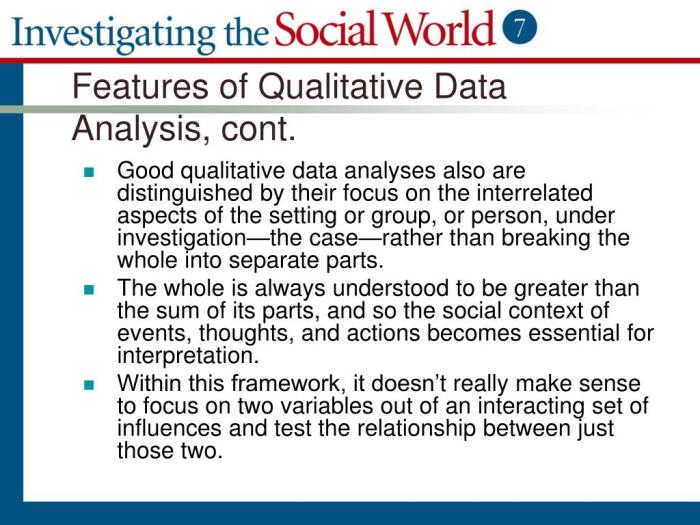
Effectively communicating qualitative findings is paramount to ensuring the research’s impact and informing decision-making. The goal is to transform complex data into clear, accessible, and compelling narratives that resonate with the audience. This requires a strategic approach that prioritizes clarity, accuracy, and engagement.
Strategies for Effectively Communicating Qualitative Findings
Presenting qualitative research findings effectively involves several key strategies. These methods enhance understanding and allow the audience to grasp the depth and nuances of the research.
- Rich Descriptions: Providing detailed, vivid descriptions is essential. This involves painting a picture of the experiences, behaviors, and contexts revealed by the data. The goal is to transport the audience to the setting or situation being described, allowing them to understand the phenomenon from the participants’ perspective.
- Direct Quotes: Incorporating direct quotes from participants is a powerful way to bring the data to life. Quotes provide authentic voices and illustrate the themes and patterns identified in the analysis. They add credibility and humanize the research, making it more relatable.
- Illustrative Examples: Using illustrative examples helps clarify complex concepts and findings. These examples can be drawn from the data, such as specific scenarios, anecdotes, or case studies, to support the interpretation. The examples should be relevant, concise, and clearly linked to the research findings.
- Thematic Organization: Structuring the findings around key themes or concepts facilitates a logical and coherent presentation. Each theme should be clearly defined and supported by evidence from the data, including quotes and examples. This organization allows the audience to easily follow the argument and understand the relationships between different aspects of the research.
- Visual Aids: Utilizing visual aids, such as charts, diagrams, and figures, can enhance the presentation of qualitative data. Visuals can effectively illustrate patterns, relationships, and trends identified in the analysis. These should be carefully designed to support the narrative and not distract from the key findings.
Example of a Participant Quote and Interpretation
An example illustrates how to present and interpret participant quotes effectively.
“It felt like I was constantly walking on eggshells. I never knew when things were going to blow up, so I just kept quiet.”
Interpretation: This quote highlights the pervasive sense of anxiety and self-censorship experienced by the participant within their environment. The metaphor of “walking on eggshells” conveys a feeling of vulnerability and fear of causing conflict or negative repercussions. The participant’s decision to “keep quiet” suggests a coping mechanism of avoiding potential threats by suppressing their own voice and opinions. The quote indicates a broader theme of a lack of psychological safety within the environment.
Significance of the Interpretation: The interpretation is significant because it provides a deeper understanding of the participant’s emotional state and the dynamics of the situation. It moves beyond the surface level of the quote to reveal underlying issues of power, control, and communication. This interpretation can inform policy changes and interventions aimed at improving the environment, for example, by implementing programs to promote open communication and create a more supportive atmosphere.
Ethical Considerations in Presenting Qualitative Data
Ethical considerations are fundamental when presenting qualitative data. Researchers must prioritize the rights and well-being of the participants.
- Ensuring Participant Anonymity: Protecting the identities of participants is crucial. This can be achieved by removing or altering identifying information, such as names, locations, and specific details that could reveal their identity. Using pseudonyms and generalizing specific details can also help maintain anonymity.
- Protecting Privacy: Safeguarding participants’ privacy involves controlling access to the data and ensuring that sensitive information is not disclosed without consent. Researchers should clearly explain how data will be stored, used, and shared. Data should be kept secure, and access should be limited to authorized personnel.
- Obtaining Informed Consent: Participants must be fully informed about the research, including how their data will be used and presented. Informed consent should be obtained before data collection and revisited before disseminating findings. This ensures that participants understand the implications of their involvement and can withdraw at any time.
- Avoiding Misrepresentation: Researchers should accurately represent the participants’ experiences and perspectives. This includes avoiding selective reporting, ensuring that the quotes are presented in context, and acknowledging any limitations in the data.
- Maintaining Objectivity: Researchers must strive to present the findings in an unbiased manner, even when the data reveals uncomfortable or challenging realities. This involves acknowledging their own biases and perspectives and providing a balanced view of the data.
Final Review
In essence, ‘what is qualitative data’ transcends mere data collection; it’s a journey into the heart of human understanding. From selecting participants to interpreting nuanced narratives, this exploration illuminates the power of qualitative research to unearth profound insights. By embracing methodologies like thematic analysis and employing strategies such as triangulation, researchers can ensure data quality and trustworthiness. As we’ve seen, effective communication, through rich descriptions and participant quotes, is crucial for sharing these findings responsibly. Ultimately, mastering the art of qualitative data empowers us to tell compelling stories, driving impactful change by providing a richer, more human understanding of the world around us.
